
Imagine trying to apply for a job, attend class, or help your kid with homework when your internet connection keeps failing. For many Americans, reliable access remains out of reach. Meanwhile, rising electricity bills put another essential service under pressure. Together, these problems raise a question: why do we still treat services that modern life depends on as luxuries instead of basic infrastructure?
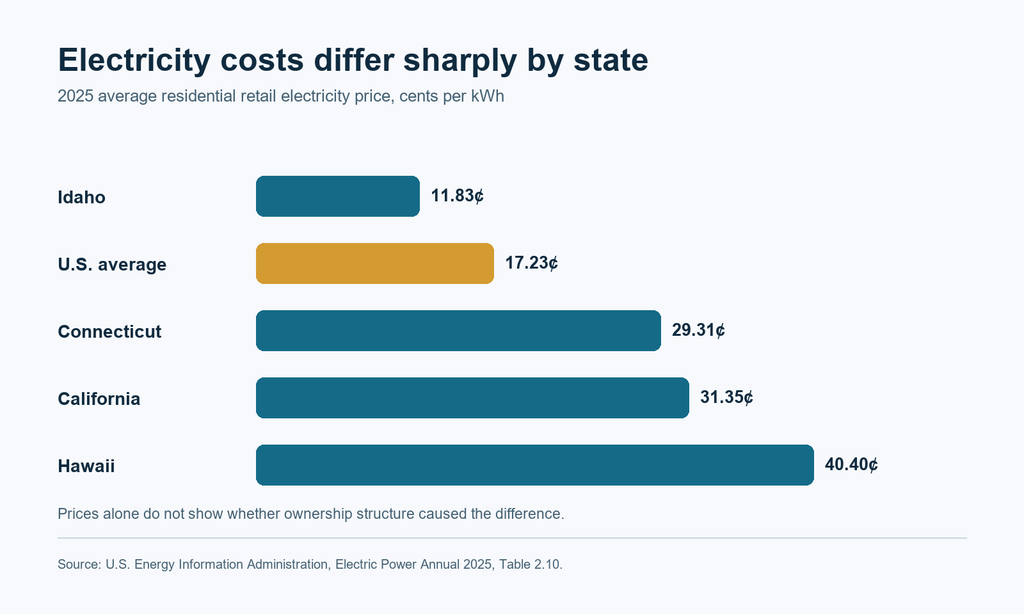
What if fast, reliable internet and affordable electricity came with the same public commitment we make to roads, schools, and clean water? That idea may sound ambitious. Yet public utilities and cooperatives already show that communities can organize essential services around a broader mission than investor returns.
High-speed internet and electricity support education, healthcare, employment, and economic growth. Even so, many rural and low-income communities struggle with access or affordability. The technology exists; the incentives to serve every community do not always follow.
In this post, I want to explore what a larger public role in internet and electricity could look like, what it might accomplish, and what we would need to get right.
Why consider a different model?
Private companies have built much of the infrastructure we rely on. However, significant gaps in access and affordability remain. For example, providers often pass over rural communities because low population density makes networks harder to finance. In some urban neighborhoods, households also have little meaningful choice among providers.
Public utilities have a different mission. Rather than maximizing quarterly returns, they can prioritize broad access, reliability, and long-term service. That mission alone does not guarantee good results. Still, it gives us a reason to consider public ownership where existing arrangements fall short.
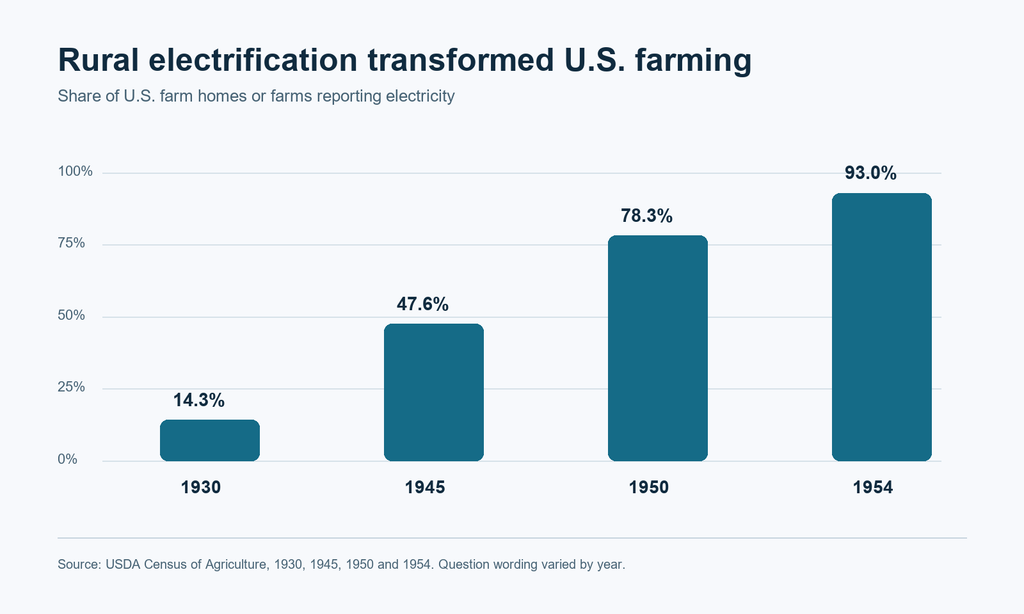
History offers a useful example. During the 1930s, federal financing helped rural electric cooperatives and public utilities extend service to places private companies had not reached. By the 1950s, more than 90% of U.S. farms had electricity, according to the USDA’s account of rural electrification. That history does not provide a complete blueprint for today, but it shows what a sustained public commitment can accomplish.

How could it work?
One option would be a national broadband agency and a separate electricity agency, each with a clear service mandate. Under this model, government charters would define their missions, while independent boards would oversee performance and costs. The public could then judge them against measurable standards for access, reliability, and affordability.
To make the transition practical, these agencies could acquire or lease some existing infrastructure rather than build every network and line from scratch. They could also offer private providers access to publicly controlled facilities under standardized terms. As a result, private companies could continue to compete on service and innovation.
Funding would require several sources. Customers could continue paying monthly bills, with protections designed to keep service affordable. In addition, private providers could pay to use shared infrastructure. Bonds or targeted taxes could help cover startup costs, while operating revenue could support the system over time.
What could we gain?
First, a public service mandate could extend access to places that the current market underserves. Your ZIP code should not decide whether you can work remotely, use telehealth, or depend on electricity.
Second, shared broadband infrastructure could give smaller providers a better chance to compete. The NTIA’s Middle Mile program illustrates one approach to expanding the networks that connect local providers to the wider internet. Competition would still depend on how access rules work in practice.
Third, public institutions could plan infrastructure investments over longer periods. That matters for grid modernization, network resilience, and future demand. But long-term planning only helps if leaders follow through and the public can see the results.
What could go wrong?
The costs would be substantial, especially at the beginning. Moreover, existing providers and opponents of public ownership would challenge the proposal. Those objections deserve serious answers, including a clear account of what the public would pay and what it would receive.
Efficiency is another concern. Government ownership does not automatically produce reliable or affordable service. Therefore, any public agency would need transparent finances, independent oversight, published performance measures, and leaders accountable for meeting them.
We can learn from existing projects without pretending every project succeeds. In a limited study, the Government Accountability Office found that federally funded and municipal broadband networks tended to offer higher speeds and slightly lower prices than the networks it compared. That finding supports further investigation; it does not prove that one ownership model will work everywhere.
A realistic way forward
Given those risks, a phased approach makes sense. Start with underserved regions and a small number of pilot programs. Then measure access, reliability, prices, customer satisfaction, and total costs. Use those results to improve the model before expanding it.
Government-run internet and electricity would not solve every problem. Nevertheless, a well-designed public option could address gaps in access, affordability, and reliability. If we believe opportunity should not depend on your ZIP code, we should test ways to treat essential infrastructure as a public responsibility—and hold the results to a high standard.